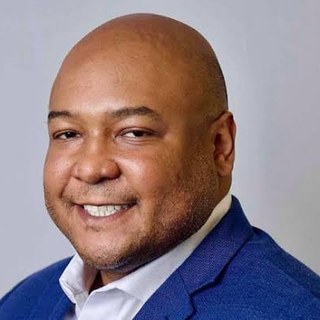
By Wayne Grube, CEO, SEAL5 min read
Russ Robison was picking blackberries on his land in western North Carolina when the revolver in his pocket went off.
Russ was alone, up near the Tennessee line. The first aid kit sat in the back seat of his truck, 35 to 40 yards away, and the nearest first responders were 20 to 30 minutes out.
Afterward, Russ wrote to us to say SEAL had saved his life. I wanted to hear the whole story from him, so our team drove out to his land and filmed Russ telling it on the property where it happened.
This is the true story of that afternoon.
Russ had spent most of the day refurbishing an old fuel tank. The paint on his left hand was still wet when he finished, so the new Benchmade pocketknife went into the right pocket instead of the left. The .357 revolver already rode in that right pocket.
The plan was to separate the two within a few minutes, before leaving. Then a phone call ran 20 or 30 minutes, and on the way out Russ walked up to the blackberry patch to pick a few.
Somewhere in the patch, the knife worked its way into the trigger guard. Russ carries with the next chamber empty in case of an accidental trigger pull, so the gun had to fire twice to reach a live round. He thinks the dry fire came as his leg swung up, and the live round as it came down.
In his right pocket
Two safeguards. One empty chamber. It still fired.
Russ carries with an empty chamber under the hammer so one accidental trigger pull does nothing. The knife in his pocket pulled it twice.
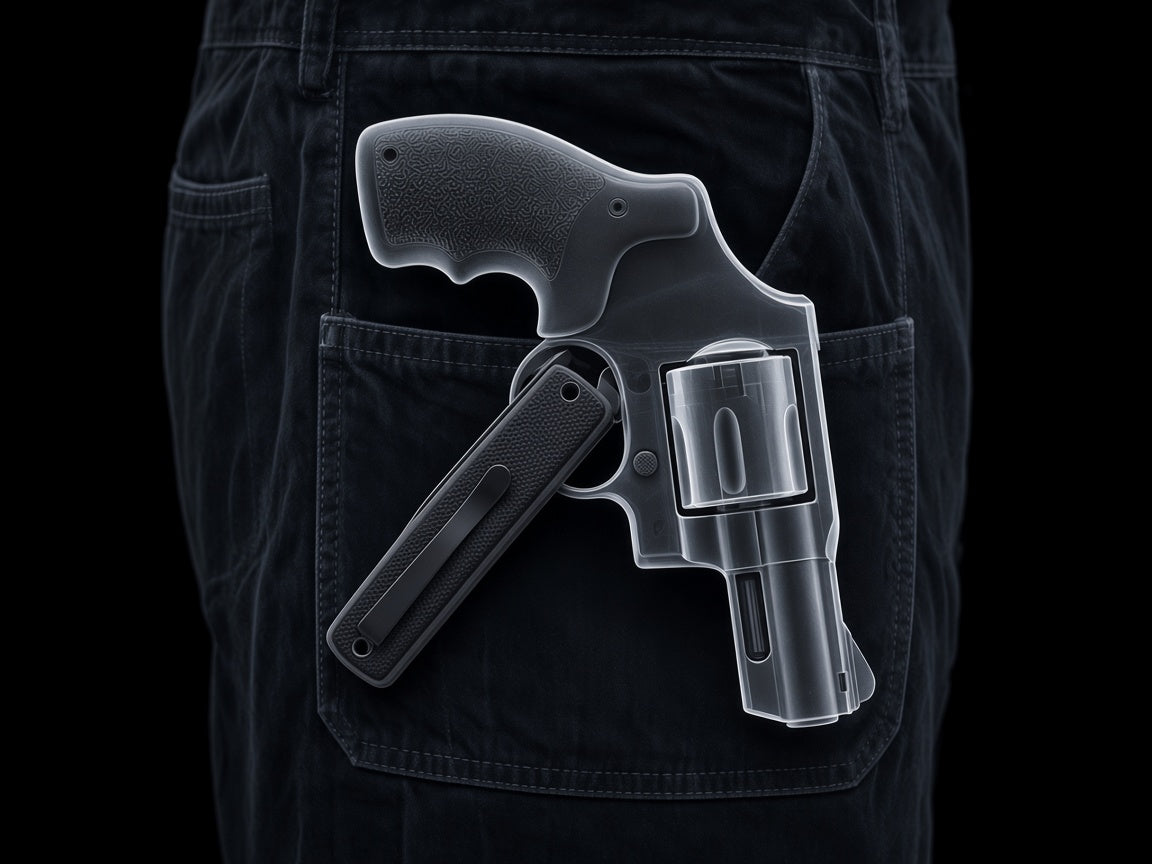
- .357 Magnum revolver
- Hammerless, so nothing snags. Next chamber empty, so one bump on the trigger is a click and not a shot. A second pull, and it was.
- Benchmade pocketknife
- Normally in his left pocket, away from the gun. Wet paint on that hand sent it to the right one for what was supposed to be a few minutes. A phone call made it half an hour.
In his first aid kit
Back seat of his truck, 40 yards away.
Smelling salts
The first thing he reached for, to keep from passing out.
SEAL OTC Hemostatic Spray
Bought in May after he saw our ad. He reread the directions, then sprayed the wound.
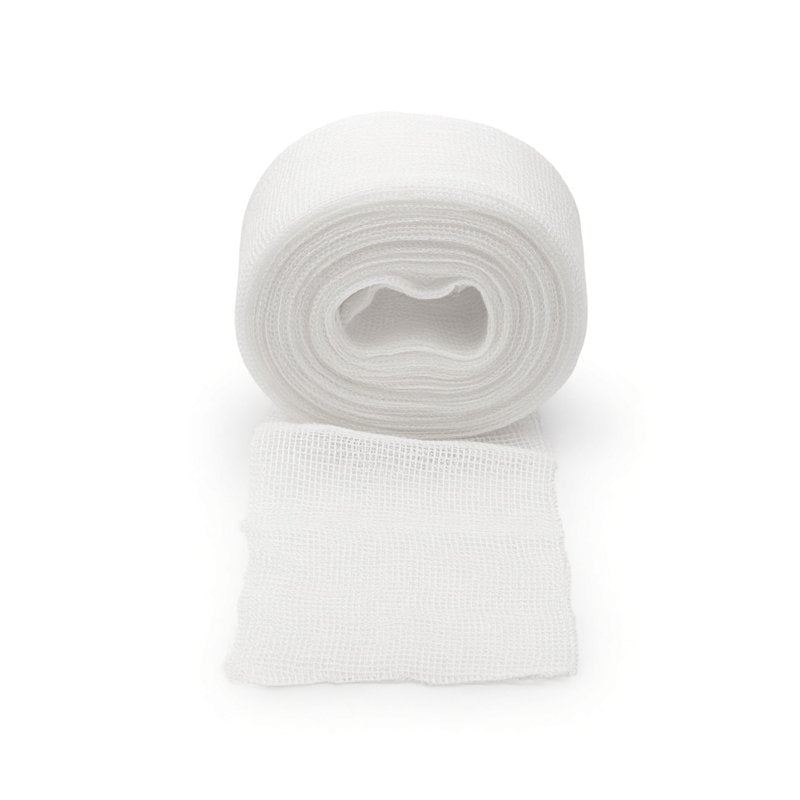
Gauze
Packed over the wound after the spray.
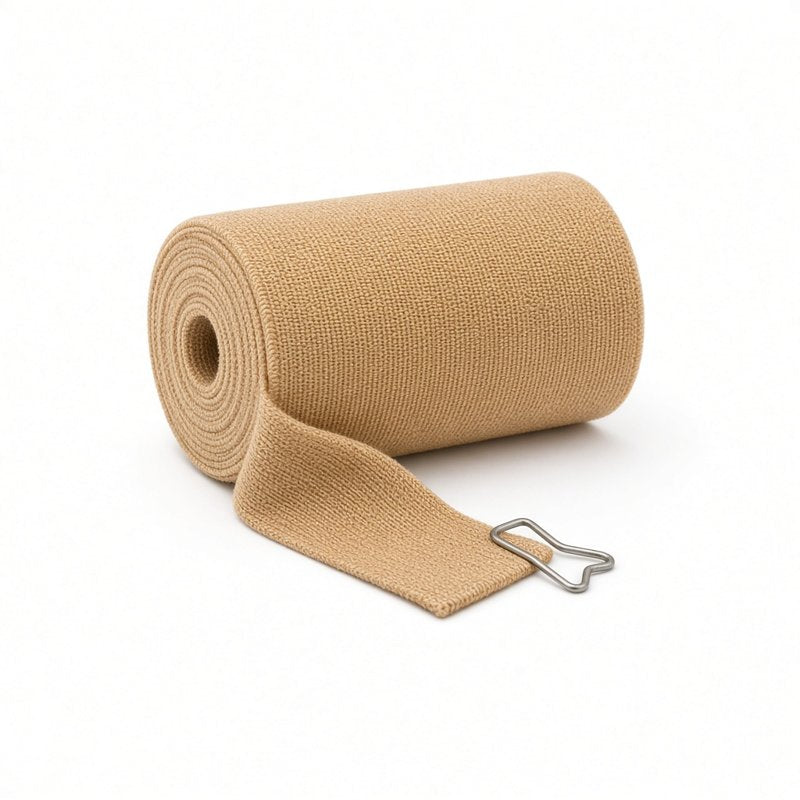
Compression bandage
Wrapped over the gauze for pressure. The medic left it in place.
Items as Russ described them. The pocket is an illustration and the item photos are representative, except the SEAL can.
“I knew I was hurt pretty bad,” he told us. “I felt like [the bullet] was in my bone, and it turned out it was.”
Russ checked his abdomen first, then tore his pants open at the bullet hole. The wound was “dumping blood pretty rapidly,” he said. There was no spray, which made an artery seem unlikely, but the blood was pulsing in time with his heartbeat.
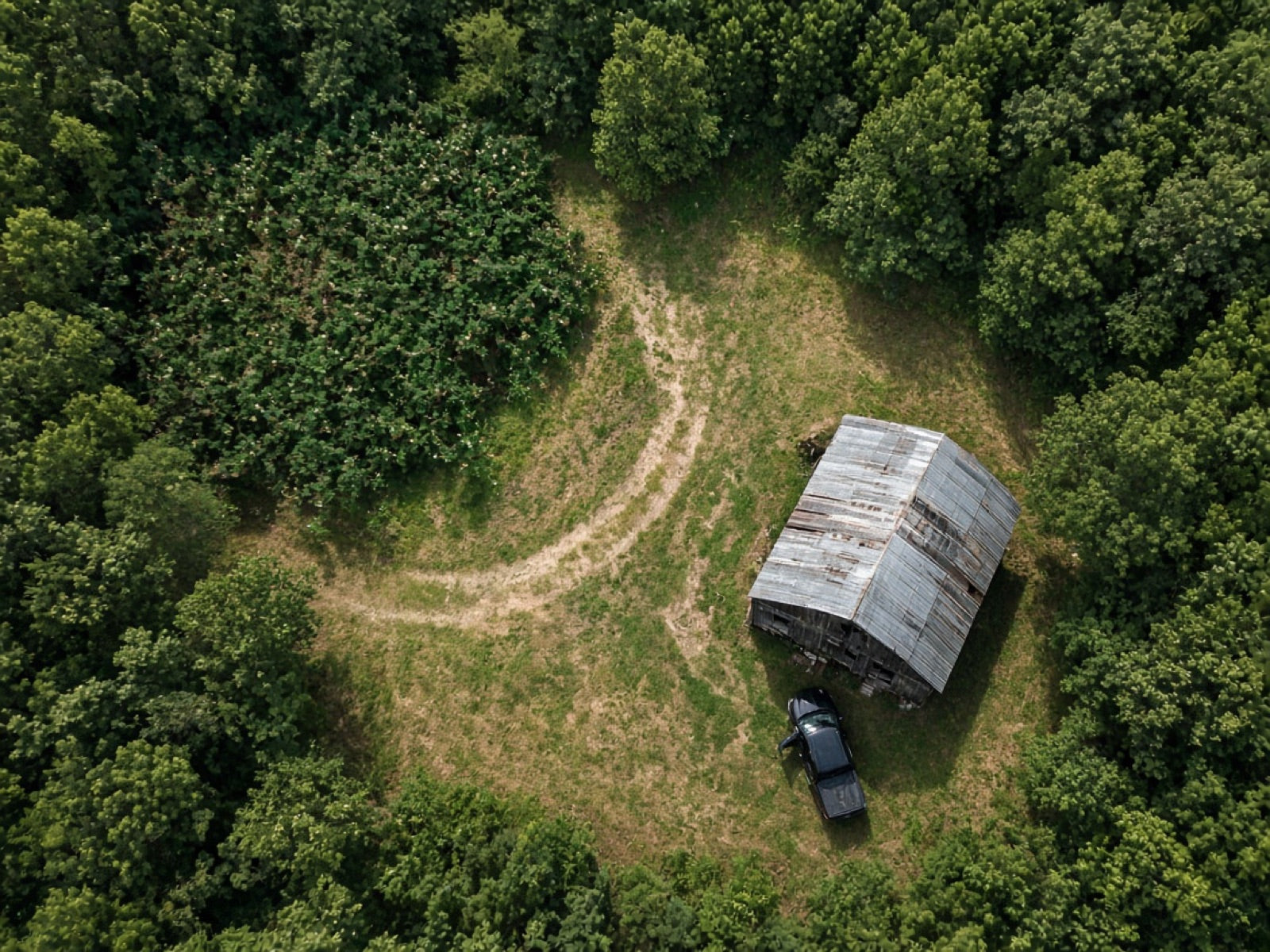
Illustration, not his actual property
His first aid kit, with a can of SEAL in it, was in the back seat of his truck.
He started for the truck, 40 yards away.
Partway there he went down on one knee. He remembers telling himself to get up and get this taken care of.
At the truck, the edges of his vision started to go dark. He believes he was close to passing out.
The smelling salts came out first. The next thing out of the kit was a can of SEAL. Russ had seen our ad on social media back in May and added a can because he spends a lot of time outdoors and it looked easy to use.
Russ read the directions one more time, even though they were familiar, then aimed the can at the wound and pressed the button.
0:00
Since the shot
0:00
The revolver goes off. Russ is alone, and bleeding fast.
~1 min
Russ reaches his kit in the back seat of his truck, 40 yards away.
~3 min
He reads the directions, aims the can at the wound, and sprays SEAL.
“Within, I don’t know, three to seven seconds, 90% of blood had stopped.”
Russ Robison, by his own count ~4 min
Gauze and a compression bandage go over the wound. Russ calls his son and drives toward the volunteer fire station, calling 911 on the way.
~5 min
The point at which severe bleeding can become fatal, per Stop the Bleed.
20–30 min
Help reaches him at the fire station. Russ says a wait like that is normal where he lives.
Times are Russ’s estimates. Five-minute mark: American College of Surgeons, Stop the Bleed.
The medic got Russ ready for IVs, then took hold of the compression bandage and reached for scissors, planning to pack clotting agent into the wound. Russ told him that was already done, with a product called SEAL. The medic looked at the wound again. “Looks like it’s done a fine job,” Russ remembers him saying. “We’re gonna leave it alone.”
I want to be clear about what SEAL did and did not do here. It did not replace the medic, the IVs, or the hospital. What it did was give Russ a way to slow the bleeding himself, with direct pressure, in the minutes when no one else could. That is exactly the job we designed it for.
What happened on Russ’s leg is not a mystery to us. SEAL is chitosan, a material that bonds to blood and tissue and helps the body clot. This fall the Journal of Special Operations Medicine published an independent, peer-reviewed study of SEAL in a severe-bleeding animal model. It performed on par with an established hemostatic agent on bleeding time, blood loss and survival, with no tissue damage and no residue left in the wound. That is the lab version of what Russ saw in the field. It is still an animal study, and SEAL OTC is still cleared for minor wounds. But it is why we were not surprised by his letter.
Russ puts his leg at about 60 percent: pain around the knee, some nerve damage and a slight limp. If it never heals any further, he told us, that is something he can live with. He can get around, and he is still here.
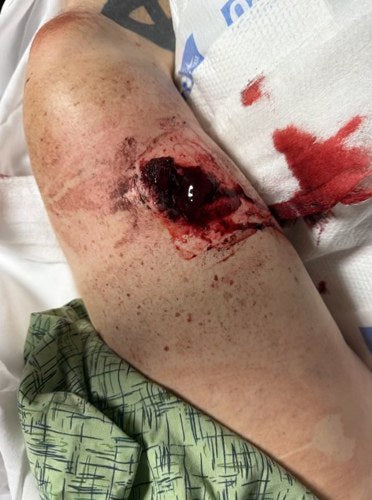
July 10, at the hospital
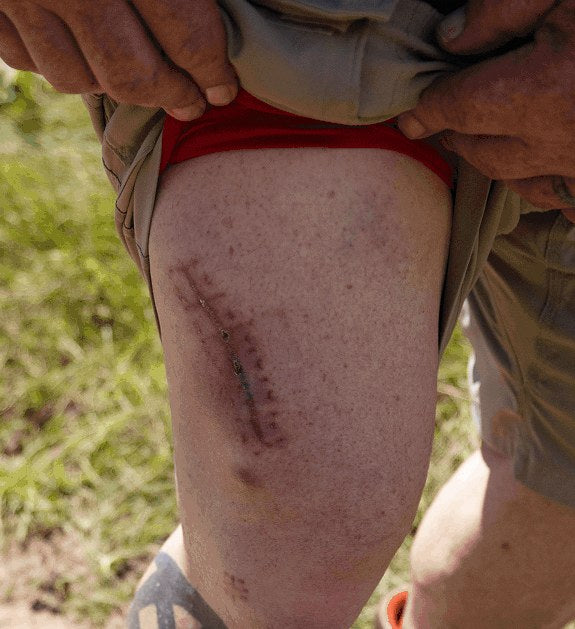
Today
I asked what changed once the bleeding slowed. Before, Russ said, he was shaking, wondering what to do if it didn’t stop. After, he felt certain he would not bleed to death as long as help was on the way.
That is why Russ wrote to us. He expects some second-guessing: no pocket carry, they’ll say, or a different holster. The revolver was set up to need two trigger pulls before a live round, and it went off anyway. “It happened to me,” he said. “So it can happen to anyone.”
The shirt Russ wore for our interview says “Expect to self rescue.” Where he lives, that is not a slogan. It is arithmetic. Russ, thank you for writing to us, and for letting us tell what happened to you. To everyone else: put a can where you spend your time. The minutes before help arrives are the ones you have to cover yourself.
“I felt like it was important to let you guys know that your product had saved my life.”
— Russ Robison
Readers of this story get 15% off SEAL OTC Hemostatic Spray. SEAL sends a share of every sale from this page to Russ for his medical bills.
Russ Robison is a real SEAL customer. What you read above is his account of what happened, in his own words in the interview and retold by Wayne Grube. Times and distances are as Russ remembers them, and the map is an illustration of the route he described. His outcome is his own. It does not predict how SEAL will perform for anyone else. Russ was not paid to tell his story. SEAL gives him a percentage of sales made through this page to help with his medical bills.
Russ used SEAL OTC, the 1.5 oz can sold on this page. It is FDA-cleared (510(k) K210751) to help stop bleeding from minor cuts, lacerations and abrasions, which is far less serious than the wound Russ had. SEAL PRO, the 2.5 oz can labeled for the temporary control of severe topical bleeding in emergency situations, is Rx only and sold to eligible buyers. Both are used with firm, direct pressure and do not replace a tourniquet or emergency care. For a severe bleed, call 911 first.
The 15% reader discount is applied automatically with code RUSS15 at checkout.
Study cited: Freier T, Montenegro R, Calado EB, et al. J Spec Oper Med. 2026;26(3):44-48. A GLP swine femoral artery hemorrhage model run by an independent contract laboratory and funded by BC3. Animal results do not establish clinical performance in people.